



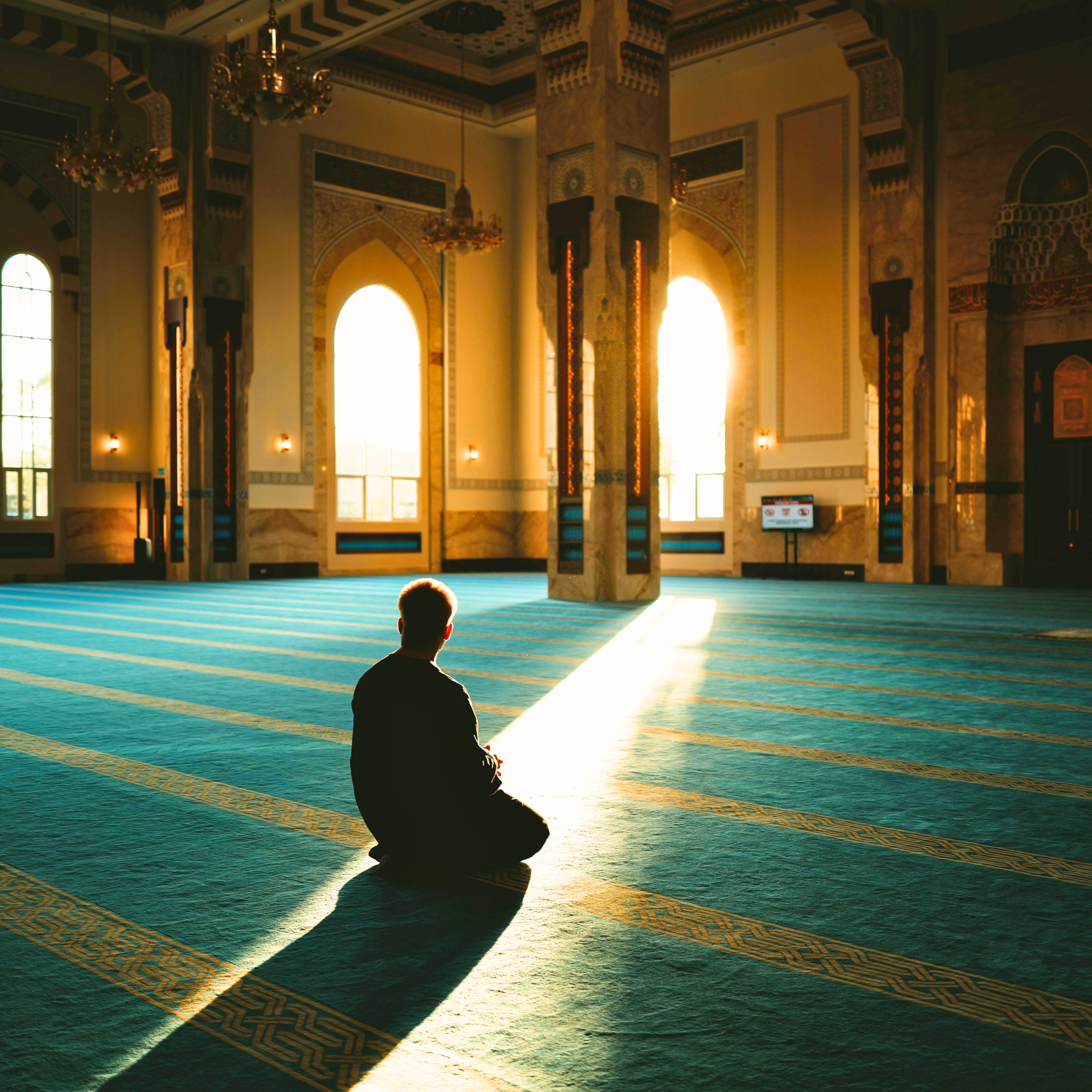
The five daily prayers (Salah) are not only an obligation in Islam, but also a system full of wisdom that shapes a believer’s day. Each prayer time carries a deeper meaning and helps a person stay connected to Allah (God) throughout daily life.
Fajr (Dawn Prayer): A Fresh Beginning
The time of Fajr (dawn prayer) marks the beginning of a new day. Darkness gives way to light, and people prepare to begin their daily activities.
It is Allah (God) who grants life, energy, and the ability to act. For this reason, performing Fajr is a way to show gratitude (shukr) and to begin the day with remembrance of Allah (dhikr).
It sets a peaceful and blessed tone for everything that follows.
Dhuhr & Asr (Midday and Afternoon Prayers): Staying Connected
The time between morning and evening is when people are most busy—working, studying, and managing daily responsibilities.
Any success or productivity during this time is ultimately by the will and help of Allah (tawfiq). To prevent forgetfulness (ghaflah) and spiritual hardness, the prayers of Dhuhr (midday prayer) and Asr (afternoon prayer) are prescribed.
These prayers offer a pause in the middle of a busy day—a moment to step back, remember Allah, and reconnect spiritually.
Maghrib (Sunset Prayer): Gratitude at the End of the Day
Maghrib (sunset prayer) comes as the day ends. It is a time to reflect on what has been done and to close the day with gratitude.
After completing daily tasks, turning to Allah in prayer brings a sense of peace and fulfillment. It is a reminder that everything we achieved was by His permission.
Isha (Night Prayer): Reflection and Rest
Isha (night prayer) is performed before sleep, a time when a person withdraws from the world and enters a state similar to a temporary “death.”
This prayer allows a believer to reflect on their day (muhasabah), seek forgiveness (istighfar), and find inner calm before resting.
It also helps a person detach from worldly concerns and prepare spiritually for the next day.
The Role of Salah in Personal and Social Life
The five daily prayers (Salah) create balance in a person’s life. They organize the day, bringing harmony between physical activity and spiritual awareness.
Through Salah, a person remembers their purpose (ibadah – worship) and strengthens their connection with their Lord (Rabb).
A Source of Unity and Community
Salah is not only an individual act of worship. It also has a strong social dimension.
Praying together in congregation (jama‘ah) builds unity, brotherhood, and a sense of community. It encourages discipline, responsibility, and care for others.
Spiritual and Emotional Benefits
The regular performance of Salah has clear benefits for mental and emotional well-being.
- It brings inner peace (sakina)
- Reduces stress and anxiety
- Provides a moment of calm in a busy life
Through supplication (du‘a) and remembrance of Allah (dhikr), a person finds comfort and a spiritual refuge.
Conclusion
The five daily prayers (Salah) are a complete system that nurtures both individual and social life.
They are a means to:
- Show gratitude to Allah (shukr)
- Seek His pleasure (rida)
- Prepare for the Hereafter (akhirah)
Making Salah a regular part of life brings true peace, balance, and lasting happiness.